 +91 9511675301
 info@trendinneed.com



How Kota Doria sarees are woven on a pit loom
Kota Doria gets its airy, see-through checks from cotton and silk yarn woven by hand on pit looms in Kaithoon and the villages around Kota. Here is how it is made, how to tell handloom from power-loom copies, and how to buy Kota Doria wholesale.
- GI-registered craft of Rajasthan
- Khat check weave
- MOQ 10 · samples from 1 piece
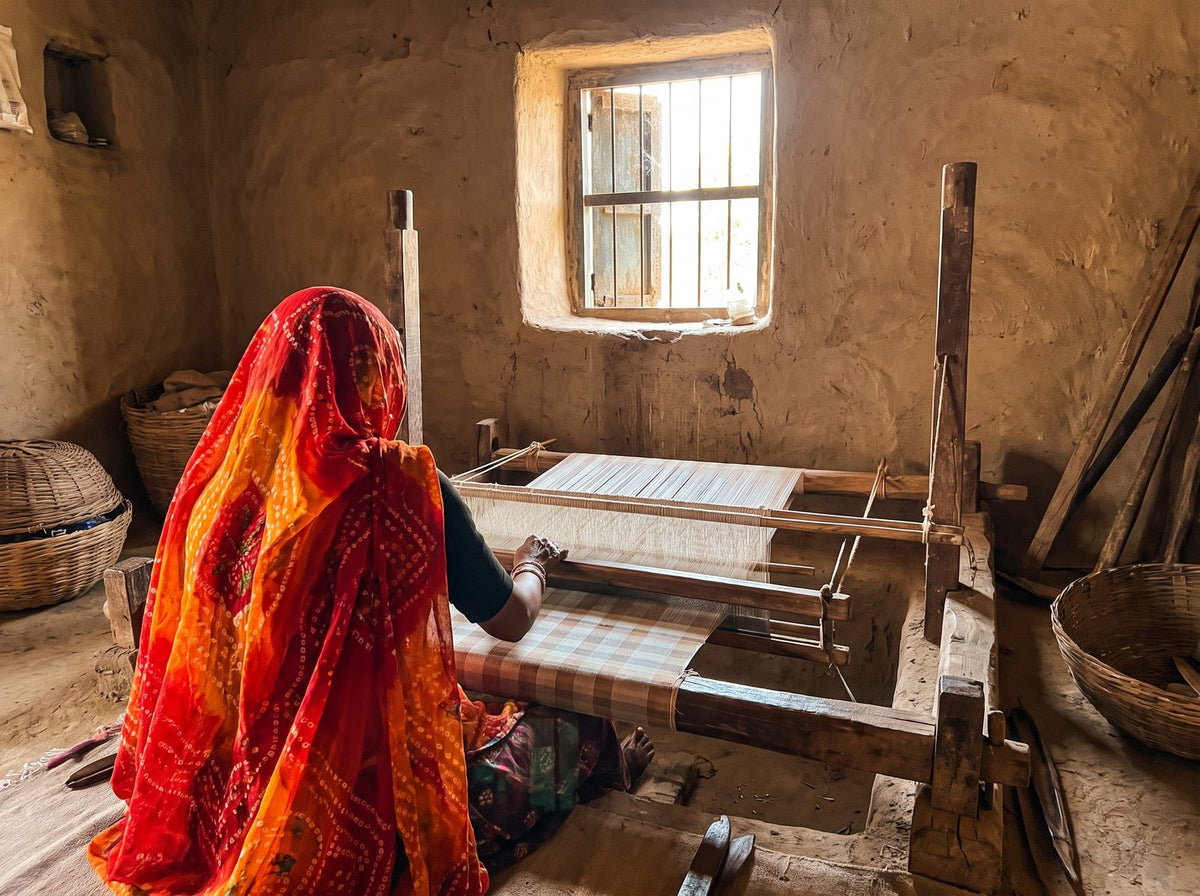
What makes Kota Doria different
Kota Doria is a light, sheer fabric woven in Kaithoon and the villages around Kota in Rajasthan. Its signature is the khat: a small square check formed by groups of cotton and silk threads in both the warp and the weft. The cotton gives strength and the silk gives a soft sheen, so the fabric stays airy without losing its shape.
The craft is often traced to weavers brought to Kota from Mysore in the late 17th century, which is why the fabric is also known as Kota Masuria. Today Kota Doria is a registered Geographical Indication (GI) of Rajasthan, and traditional pieces are still woven by hand on pit looms.
Why buyers stock Kota Doria
- Light and breathable, so it sells well in summer and for office and daily wear.
- A plain Kota Doria base takes block printing, hand-painting, embroidery and gota patti well, so one fabric covers many price points.
- Sarees, suits and dupattas in the same fabric let boutiques build a matching range.
How a Kota Doria saree is made
From yarn to finished saree, this is how a traditional Kota Doria is made on a pit loom.
Choosing the yarn
Cotton and silk yarn are chosen for the weave. The cotton gives the fabric strength and the silk adds sheen; pure cotton Kota Doria uses cotton alone.
Strengthening the warp
Traditionally, the fine warp threads are coated with a paste made from onion juice and rice so they don't snap during weaving. This sizing is one reason handwoven Kota Doria feels slightly crisp.
Setting up the loom
Cotton and silk threads are laid out on the warp in planned groups, so the squares line up evenly across the width of the saree.
Weaving the khat on the pit loom
The weaver sits at floor level with legs in the pit, works the treadles with the feet and throws the shuttle by hand. Alternating groups of cotton and silk in the weft complete each square khat.
Adding zari and motifs
For zari borders, butis or pallu designs, extra threads are woven in by hand, line by line. Designs with zari take noticeably longer than plain sarees.
Finishing and value addition
After weaving, plain Kota Doria can be block printed, hand-painted, embroidered or decorated with gota patti to create different ranges.
Checking and dispatch
Each saree is checked for broken threads and uneven checks, then folded and packed for wholesale buyers. Handmade pieces are dispatched in about 5 to 7 days.
Pit loom vs power loom: how to spot genuine handwoven Kota Doria
Power looms also make 'Kota-style' check fabric, faster and cheaper. The video shows a jacquard power-loom unit, so you can see how different the machinery is from a pit loom.
| Pit loom (handloom) | Power loom | |
|---|---|---|
| The loom | Wooden frame set into a pit, worked by the weaver's hands and feet | Metal frame driven by a motor; one worker often runs several looms |
| The khat checks | Tiny irregularities; the squares are not all perfectly identical | Perfectly uniform squares from end to end |
| Feel | Very light, slightly crisp, with a natural texture | Smoother and more even; can feel heavier or synthetic |
| Edges (selvedge) | Can be slightly uneven | Straight and uniform |
| Speed | Slow: a plain saree takes several days | Much faster |
| Price | Higher | Lower |
| Best for | Premium, boutique and handloom-conscious customers | Budget ranges and large uniform orders |
Buying for customers who want handloom? Ask us before you order and we'll check with the maker how that design is woven. You can also order 1 to 5 samples to check the weave in hand.
Kota Doria sarees at wholesale prices
Live designs from Kota weaving and finishing units. Prices are per piece, excluding GST and shipping.
 MOQ 10
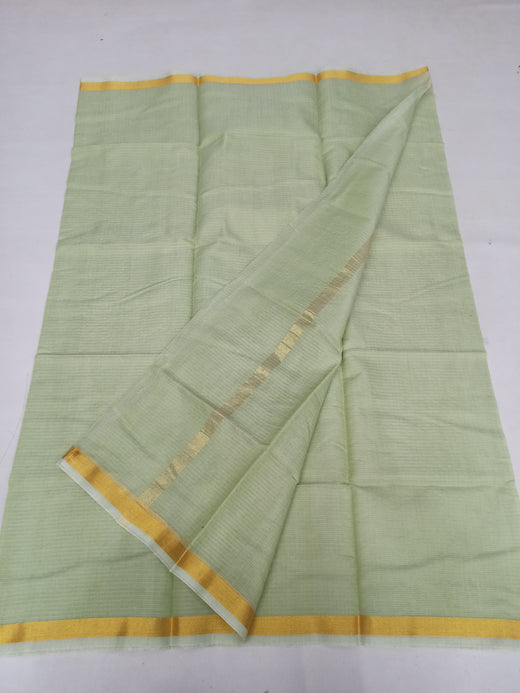 MOQ 10
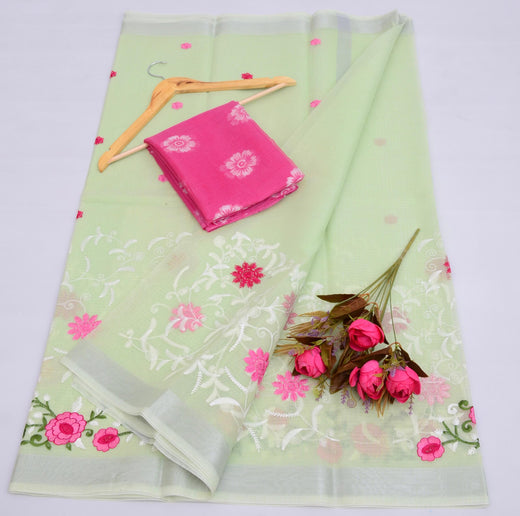 MOQ 10
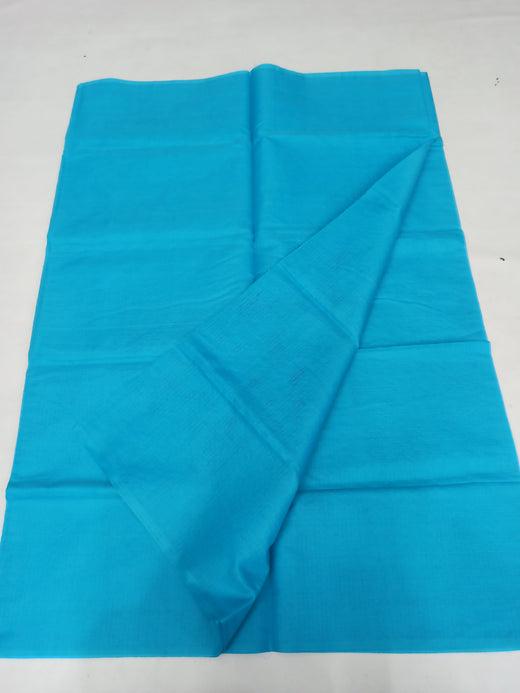 MOQ 10
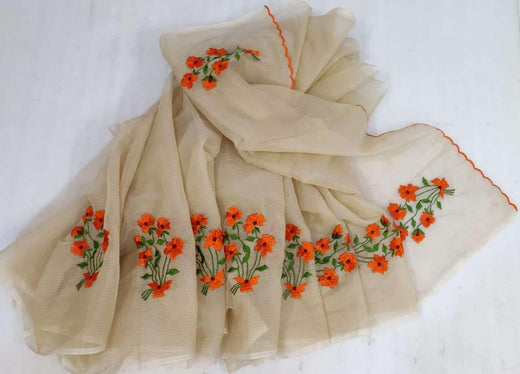 MOQ 10
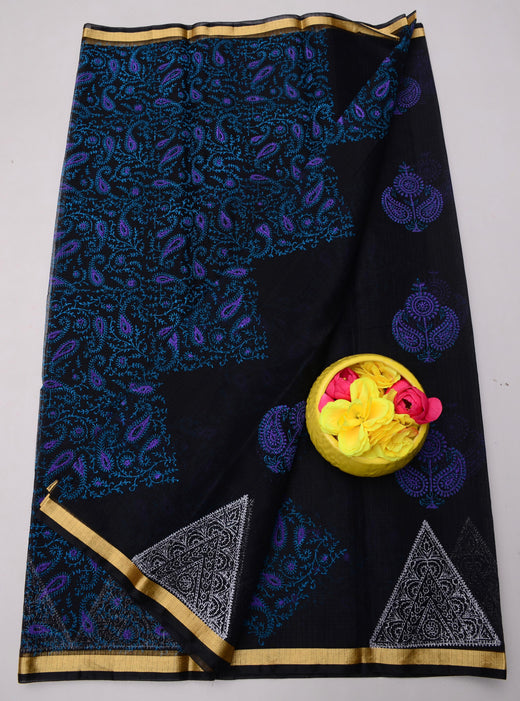 MOQ 10
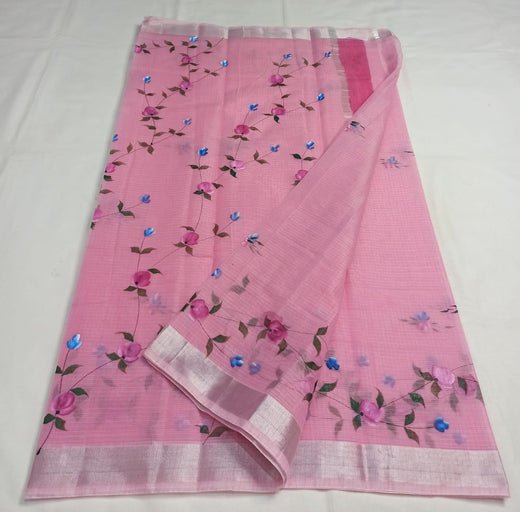 MOQ 10
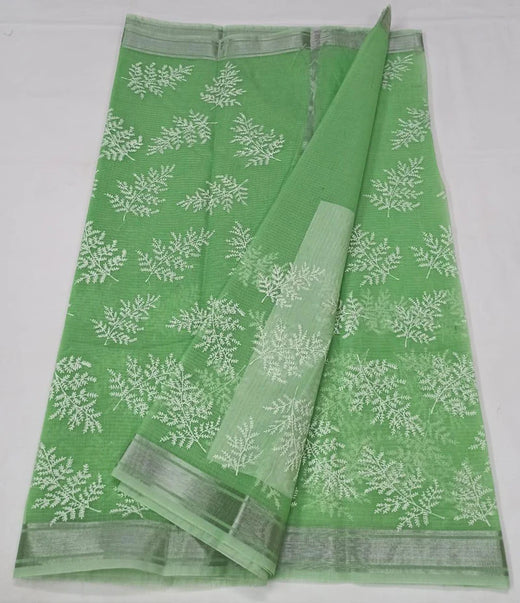 MOQ 10
 pieces per order; mix designs from the same maker to reach it.
What buyers make from Kota Doria
The same light fabric becomes suits, dupattas and value-added sarees. Prices and design counts are live.

Kota Doria suits
Unstitched 3-piece suits: top, bottom and dupatta.
Shop suits →
Kota Doria dupattas
Plain, printed and hand-painted dupattas, MOQ 25.
Shop dupattas →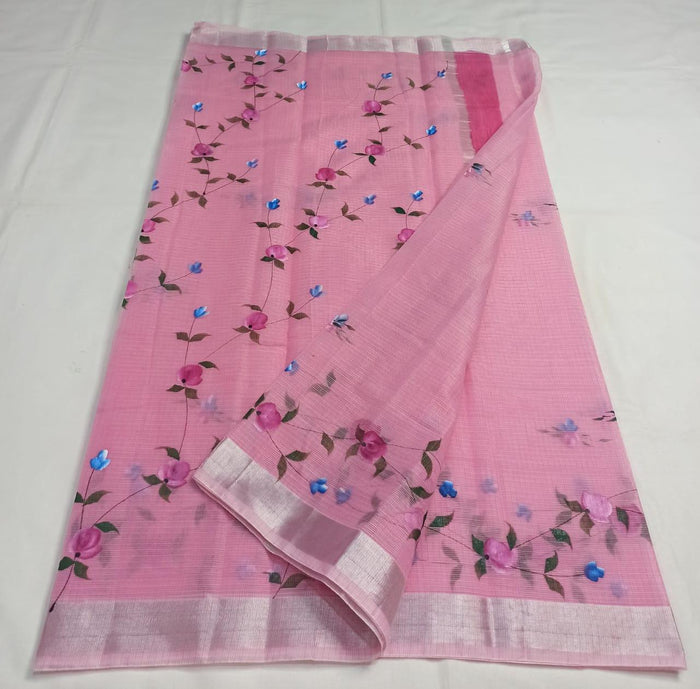
Hand-painted sarees
Painted by hand on a plain Kota base.
Shop hand-painted →
Gota patti sarees
Rajasthani gota patti work for festive orders.
Shop gota patti →
Block printed sarees
Hand block prints on breathable Kota Doria.
Shop block prints →
Embroidered sarees
Embroidery that keeps the fabric light.
Shop embroidered →Buy Kota Doria wholesale, direct from Kota units
We source Kota Doria sarees, suits and dupattas from weaving and finishing units in and around Kota and sell them online to boutiques, saree shops, resellers, wholesalers and corporate buyers across India.
- MOQ: 10 pieces (25 for dupattas); mix designs from the same maker.
- Samples: order 1 to 5 pieces from the Kota Doria sample collection first.
- Prices: wholesale, excluding GST and shipping. See the live price list.
- Dispatch: 4 to 5 days standard; 5 to 7 days for hand-painted, block printed and other handmade pieces. Delivery typically within 12 to 15 days.
- Invoice: GST invoice with every order; a GST number is not compulsory.
- Bulk and export: large, repeat, custom-colour or overseas orders by quotation.
Planning a trip to Kota instead? Read our Kota Doria wholesale market guide, learn how to source authentic handwoven Kota Doria in bulk, or see why Kota Doria is a profitable choice for resellers. Need fabric by the metre? See Kota Doria fabric wholesale.
Kota Doria and pit loom questions, answered
What is a pit loom?
A pit loom is a traditional wooden handloom set into a shallow pit in the floor. The weaver sits at floor level with legs in the pit, works the treadles with the feet and passes the shuttle by hand, which gives fine control over delicate weaves like Kota Doria.
Is pit-loom Kota Doria a handloom product?
Yes. Pit-loom weaving uses no electricity or motor; every thread is woven by hand and foot, so it counts as handloom.
Where is Kota Doria made?
Mainly in Kaithoon and the villages around Kota in Rajasthan. Kota Doria is a registered Geographical Indication (GI) of Rajasthan.
What is the khat in Kota Doria?
The khat is the small square check that defines Kota Doria. It is made by weaving groups of cotton and silk threads in both directions, which leaves the fabric sheer and airy.
How can I tell handwoven Kota Doria from power-loom copies?
Look for tiny irregularities in the checks and edges, a very light and slightly crisp feel, and a higher price. Power-loom versions have perfectly uniform squares and straight edges. When in doubt, order a sample or ask us to check with the maker.
How long does it take to weave a Kota Doria saree?
A plain saree takes several days on a pit loom. Designs with zari borders or motifs take longer because the extra threads are added by hand.
Is Kota Doria pure cotton or cotton silk?
Traditional Kota Doria mixes cotton and silk. Pure cotton Kota Doria is also woven and is popular for daily and summer wear; check the fabric on each product page.
Can I buy Kota Doria sarees wholesale from you?
Yes. The MOQ is 10 pieces (25 for dupattas), you can mix designs from the same maker, and you can order 1 to 5 samples first. Prices exclude GST and shipping, and every order comes with a GST invoice.
Do you also supply Kota Doria suits and dupattas?
Yes: unstitched Kota Doria suits (dress material) with an MOQ of 10 and dupattas with an MOQ of 25, in plain, printed, hand-painted, embroidered and gota patti styles.
Buy Kota Doria wholesale from 10 pieces
Order samples first, or send your requirement for a bulk, custom-colour or export quote.
Want to see more units? Take the factory tour →