 +91 9511675301
 info@trendinneed.com



Power loom · 0:24
Jacquard power-loom unit
Rows of motor-driven looms weave a butidar (small-motif) fabric. The punched jacquard cards above each loom control the pattern, so every metre repeats exactly.
Pit loom vs power loom →
Real videos from the weaving, printing and embroidery units that make the sarees and suits we sell wholesale. These units belong to our supplier partners, not to us. We show them so you can see exactly where your stock comes from.
Most wholesale buyers never see where their sarees are made. We work with weavers, manufacturers, printers and embroidery units across India, and these videos show their processes as they are: on the shop floor, not in a studio.
Use them to understand the difference between handloom and power-loom fabric, to explain craft and quality to your own customers, and to decide which ranges suit your shop.
Our sourcing hubs are Kota (Rajasthan) for Kota Doria, Varanasi (Uttar Pradesh) for Banarasi weaves, Bhagalpur (Bihar) for tussar and linen, and Surat (Gujarat) for woven and printed sarees. See sourcing by state or read how we source.
Short clips from supplier units. Each one shows a single step in how wholesale sarees and dress material are made.
Rows of motor-driven looms weave a butidar (small-motif) fabric. The punched jacquard cards above each loom control the pattern, so every metre repeats exactly.
Pit loom vs power loom →A power loom weaving a light, linen-look fabric of the kind used for Bhagalpur sarees and dress material.
Shop the Bhagalpur collection →A multi-head embroidery machine stitches the same motif across a long length of fabric at once, which keeps every piece in a bulk order identical.
Shop embroidered sarees →Most sarees we sell pass through some or all of these steps at our supplier units.
Cotton, silk, linen or blended yarn is dyed in batches. Dyeing a whole lot together keeps the colour consistent across a bulk order.
The fabric is woven on a pit loom (handloom) or a power loom. Handlooms give the slight irregularity many buyers value; power looms give speed and identical repeat orders.
Block printing, screen printing or hand-painting adds the design to plain woven fabric such as Kota Doria.
Machine embroidery gives consistent bulk runs; hand embroidery, gota patti and zari work are used for premium pieces.
Each piece is checked for weaving faults, stains and size, then folded and packed at the unit.
Orders are picked up by courier from the unit. Standard dispatch is 4 to 5 days, or 5 to 7 days for handmade pieces, with a GST invoice.
Each process has its place. Use this to match the range to your customers and your price point.
| Handloom (pit loom) | Power loom | Machine embroidery | |
|---|---|---|---|
| Look and feel | Light, slightly irregular weave with a handmade character | Even weave and exact repeat patterns | Crisp, identical motifs on every piece |
| Bulk consistency | Small variations from piece to piece | High: every piece matches | High: same design across the whole lot |
| Dispatch | Handmade pieces: 5 to 7 days | Standard: 4 to 5 days | Standard: 4 to 5 days |
| Price | Higher | Lower | Mid-range |
| Best for | Premium boutiques and handloom-conscious customers | Budget ranges, uniforms and large repeat orders | Festive and party wear in bulk |
Not sure which suits your customers? Order 1 to 5 samples of each and compare them in hand before you buy in bulk.
See how it is made, then shop the ranges made that way. Prices and design counts are live.
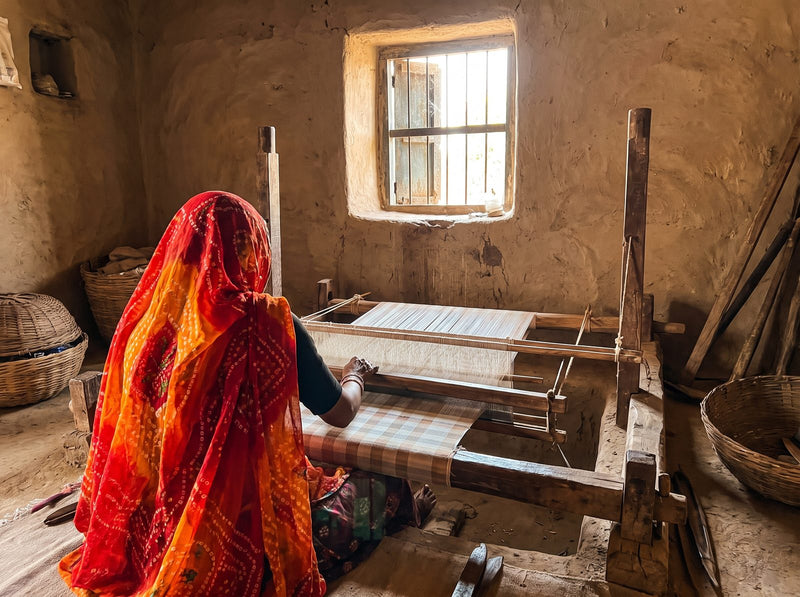
How Kota Doria's khat checks are woven by hand in Kota.
Read the process → From Rs. 560 · 16 designs
Kota Doria sarees printed by hand with wooden blocks.
Shop block prints →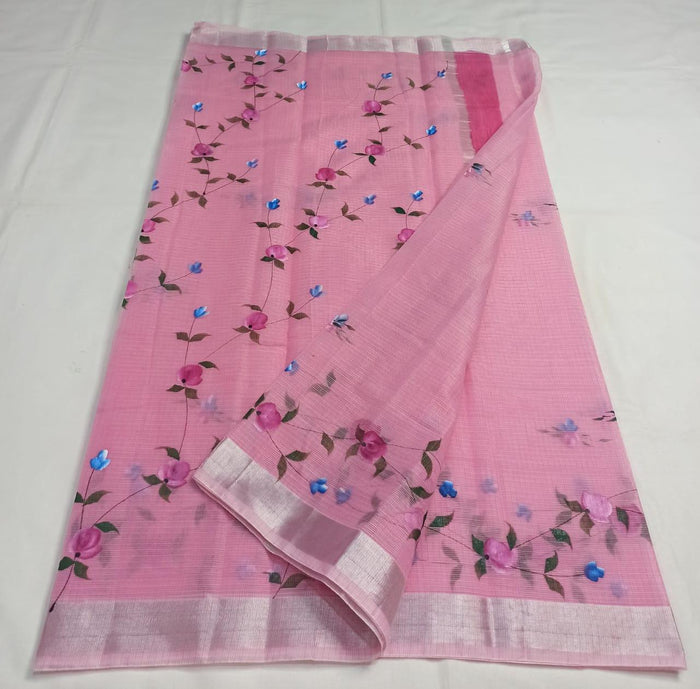 From Rs. 770 · 10 designs
Sarees painted by hand on light Kota Doria.
Shop hand-painted → From Rs. 670 · 35 designs
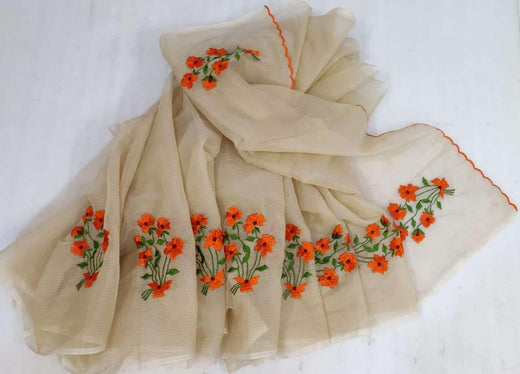
Embroidery on light, breathable Kota fabric.
Shop embroidered → From Rs. 380 · 38 designs
Tussar, linen and cotton-silk from Bihar's silk city.
Shop Bhagalpur → From Rs. 782 · 28 designs
Zari and brocade sarees from Varanasi in silk blends.
Shop Banarasi →Current bestsellers and new arrivals. Prices are per piece, excluding GST and shipping.
 MOQ 10
 MOQ 10
 MOQ 10
 MOQ 10
 MOQ 10
 MOQ 10
 MOQ 10
 MOQ 10
 pieces per order; mix designs from the same maker to reach it.
No. They belong to our supplier partners: weavers, manufacturers, printers and embroidery units across India. We show their work so you can see where your stock is made.
A 3-minute tour of supplier units covering loom weaving, printing, hand-painting and hand embroidery, plus short clips of a jacquard power-loom unit, a power loom in Bhagalpur and a multi-head embroidery machine.
Handloom (pit-loom) sarees are woven by hand and foot, with slight irregularities and a higher price. Power-loom sarees are woven on motor-driven looms: faster, cheaper and uniform, which suits large repeat orders.
Traditional Kota Doria is woven on pit looms in and around Kaithoon near Kota, and power-loom versions also exist in the market. If handloom origin matters for your customers, ask us before ordering and we will check with the maker for that design.
Standard dispatch is 4 to 5 days. Handmade pieces such as hand-painted and block printed sarees take 5 to 7 days, and can take longer in the monsoon because colours need time to dry.
Yes. You can order 1 to 5 sample pieces to check fabric, colour and finish. Samples cost a little more than the wholesale price.
Yes. The MOQ is 10 pieces (25 for dupattas), and you can mix designs from the same maker. For large, repeat, custom-colour or private-label orders, send a request for quotation.
Yes. Manufacturers, weavers and finishing units with ready stock and bulk capacity can apply to become supplier partners on our Become a Supplier Partner page.
Order 1 to 5 pieces to check the fabric and finish, or send your bulk, custom or export requirement for a quote.
Run a weaving, printing or embroidery unit? Become a supplier partner →
Thanks for subscribing!
This email has been registered!